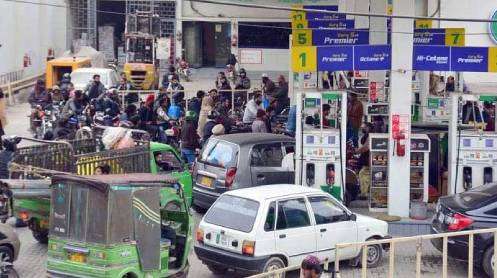
ISLAMABAD: In a major policy shift, the federal government has withdrawn blanket fuel subsidies, triggering an unprecedented surge in petroleum prices—42.7% for petrol and 55% for high-speed diesel (HSD)—amid escalating global oil volatility linked to the US-Israel war on Iran.
With immediate effect, petrol prices have risen by Rs137.23 per litre to Rs458.41, while HSD has increased by Rs184.49 per litre to Rs520.35. Kerosene prices also climbed by Rs34.08 per litre to Rs457.80.
To manage the price shock, the government adjusted petroleum levies—raising petrol levy to Rs160 per litre from Rs105, while reducing diesel levy to zero from Rs55—to limit the impact on transport and food supply chains.
Speaking during a joint late-night address, Petroleum Minister Ali Pervaiz Malik and Finance Minister Muhammad Aurangzeb said the “difficult but necessary” decision followed extensive consultations involving national leadership, including the prime minister and provincial governments. The move aims to maintain fiscal discipline under commitments with the International Monetary Fund while shielding vulnerable segments through targeted subsidies.
Targeted Relief Measures Announced
To cushion the impact on key sectors, the government introduced a range of focused subsidies:
- Motorcyclists: Rs100 per litre subsidy (up to 20 litres/month for three months)
- Small farmers: One-time support of Rs1,500 per acre during harvest
- Transport sector: Rs100 per litre subsidy for diesel used in goods and inter-city transport
- Freight trucks (food supply): Rs70,000 monthly support
- Large transport vehicles: Rs80,000 per month
- Public transport (inter-city): Rs100,000 per month
- Pakistan Railways: Subsidies to maintain affordable fares and freight services
All relief measures will be reviewed monthly in line with global market conditions.
Energy Conservation Measures
As part of broader demand management, the government also announced early market closures to reduce electricity consumption, targeting savings of around 1,200 MW during peak hours. Revised business timings will be finalised in consultation with provinces.
Global Pressures and Economic Implications
Officials cited extreme volatility in international energy markets, with crude oil prices in Oman and Dubai benchmarks surging by 80–90%, while diesel reportedly touched $250 per barrel—a historic high. Authorities warned that several countries have already faced fuel shortages and unrest due to panic buying.
Finance Minister Muhammad Aurangzeb noted that Pakistan is striving to balance rising import costs, inflation risks, and macroeconomic stability, while continuing reforms under the International Monetary Fund programme. He also highlighted that domestic fertiliser prices remain significantly lower than global levels.
Shift to Fiscal Discipline
The government acknowledged that while blanket subsidies were initially considered, the rapidly changing global energy landscape made them unsustainable. The new approach focuses on targeted support and fiscal prudence to avoid derailing economic stability.
Separately, Islamabad is seeking flexibility from the International Monetary Fund ahead of upcoming global financial meetings, as it navigates mounting external pressures and evolving geopolitical risks.
The latest measures underscore the growing challenge for Pakistan in balancing energy security, economic stability, and public affordability in an increasingly uncertain global environment.
Story by Khaleeq Kiani